Mashed Potato
- 55 minutes
- Effort 20 minutes
- Ingredients 3
- Serves 4
- Portion calories 285
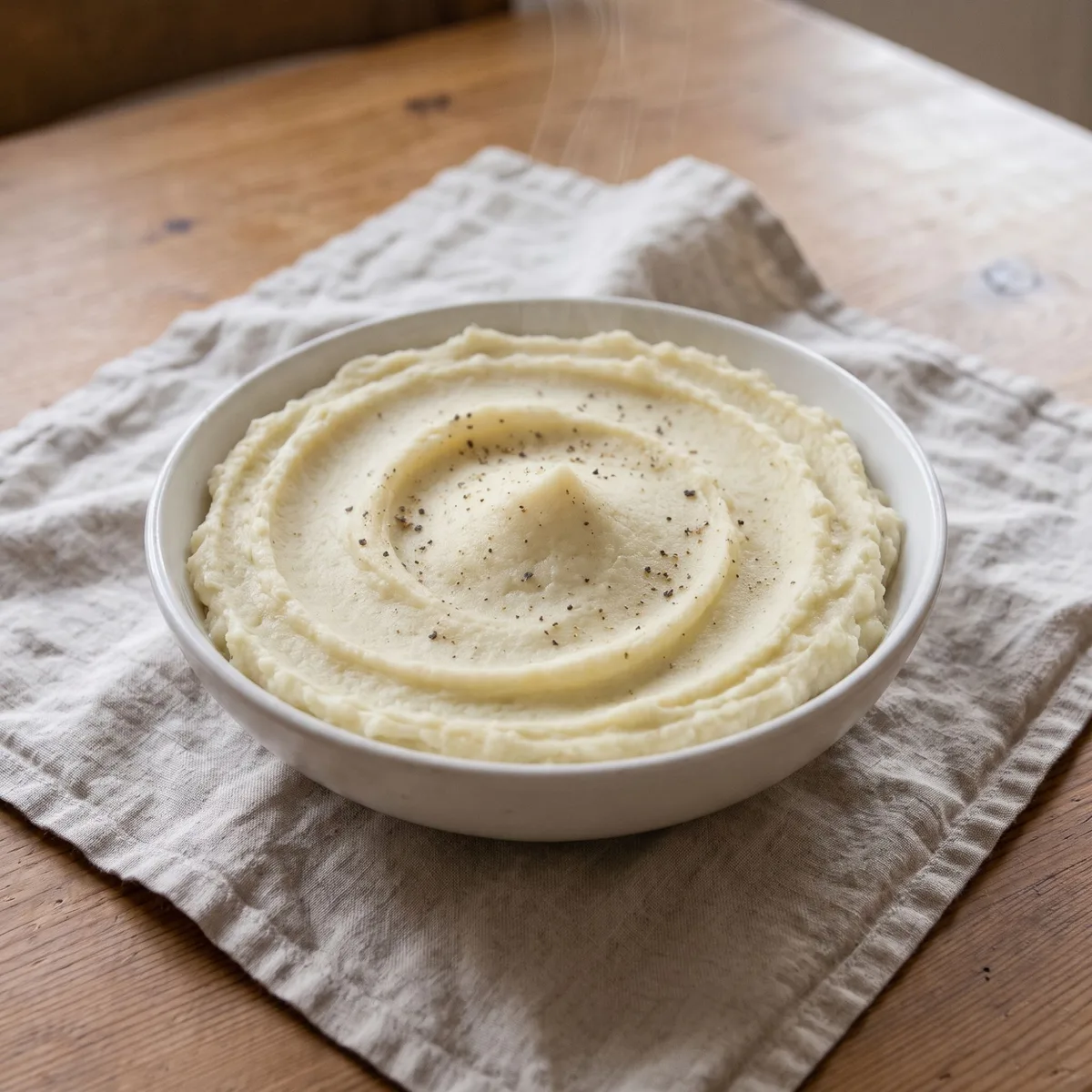
Floury potatoes, dried in the hot pan so they never turn watery, then mashed until completely smooth with vegan butter and warm oat or soya cream. A comforting side for any Sunday roast.
Ingredients
Equipment
- Vegetable peeler
- Chopping board and sharp knife
- Large pan with a lid
- Small pan - for the cream and butter
- Colander
- Potato masher
- Wooden spoon
Allergen info
- Oat or soya cream Soya cream contains soya. Oat cream may contain gluten, so choose a certified gluten-free one if needed.
- Vegan block butter Brands vary, so check the label for soya, nuts or other allergens.
Steps
Screen stays on while you cook · Screen can go to sleep ·
Click a highlighted time to start a timer.
-
PrepareWhen done press the → key or click step number to move to Step 2Peel 1kg Maris Piper or King Edward potatoes with a vegetable peeler. Cut them into even chunks of about 4cm with a sharp knife on a chopping board.
-
BoilPut the chunks in a large pan and cover them with cold water by about 2cm. Add 1 tsp salt. Put the lid on and bring to the boil over a high heat. Take the lid off. Turn the heat down to medium and boil gently for . To check they're ready, push the tip of a sharp knife into the biggest chunk - it should slide in with no resistance. If not, boil for another . Starting in cold water cooks the chunks evenly, so the outsides don't fall apart before the middles are soft.
-
WarmWhile the potatoes boil, put 100ml oat or soya cream and 50g vegan block butter in a small pan over a low heat. Warm until the butter has melted and the cream is hot but not boiling. Cold cream cools the mash and can make it gluey.
-
DrainDrain the potatoes well in a colander. Tip them back into the hot, empty pan, off the heat. Let them steam dry for . Drying them stops the mash turning watery.
-
MashMash the potatoes in the pan with a potato masher, pressing down all over the pan. Lift the masher now and then and check the bottom of the pan for lumps. Stop as soon as no lumps are left and the mash looks soft and fluffy. If it starts to look shiny and sticky, or stretches like glue when you lift the masher, it has been mashed too much.
-
MixPour in the warm cream and butter. Stir gently with a wooden spoon until there are no streaks of cream left. Stop stirring as soon as it's mixed - it should look creamy, not shiny or sticky.
-
SeasonAdd ½ tsp salt and stir it in with the wooden spoon. Taste, then season with more salt, if needed, and a few grinds of black pepper.
-
ServeServe straight away.
All 8 steps done. Click the button to add it to your profile.
Added to your profile. Thanks for cooking with VeganSunday.
Make ahead
Free up the hob on Sunday. Make the mash up to 3 days ahead, then reheat it on the day.
- Before Cook up to the end of step 7. Let it cool, then cover and refrigerate within 2 hours. It keeps for up to 3 days.
- On the day Reheat it with a splash of oat or soya cream until steaming hot all the way through (see Reheating below).
- To serve Taste, then season with more salt if needed, and serve straight away.
Reheating
Potato mash stiffens as it sits, so before reheating, stir in a splash of oat or soya cream to loosen it. Whichever way you choose, reheat only once, until it's steaming hot all the way through. For peace of mind, check with a food thermometer - the centre should reach at least 75°C, which is hot enough to kill harmful bacteria.
Microwave
Put it in a covered microwave-safe bowl and heat for per portion, stirring every minute.
Trade-off Quickest, but heats unevenly. The edges can dry out while the middle stays cool, so stir well and check it's hot throughout.
Hob
Warm in a pan over a low to medium heat with a splash of cream for , stirring often so it doesn't catch on the bottom.
Trade-off Needs your attention, but gives the creamiest, most even result. It's the closest to freshly made.
Oven
Spread in an ovenproof dish, dot with a little vegan butter, cover with foil and heat in a fan oven at 160°C (180°C conventional, gas mark 4) for , stirring halfway.
Trade-off Slowest, but hands-off and handy for large batches.
Chilling
- Cooling Let leftovers cool, then cover and put them in the fridge within 2 hours of cooking. Spreading the mash out in a shallow container helps it cool faster.
- How long Eat within 3 days.
- Method Keep it in a covered bowl or airtight container. If using cling film, stretch it over the bowl so it doesn't touch the mash.
- Texture It firms up in the fridge. A splash of warm cream and a good stir bring it back when you reheat it.
Freezing
- Freezes well The butter and cream help it freeze better than plain mash, but it can turn a little grainy or watery once thawed. A good stir and a splash of warm cream while reheating bring it back.
- How long Freeze for up to 3 months for the best flavour.
- Method Freeze it cooled, in portions, in airtight containers or freezer bags, and label with the date.
- Defrosting Thaw overnight in the fridge, or use your microwave's defrost setting if you're short of time. Don't defrost it on the worktop. Once defrosted, reheat within 24 hours and don't refreeze.
FAQs
Quick answers to common questions.
Can I steam the potatoes instead of boiling them?
Yes. Steam the chunks in a steamer over a pan of boiling water for 20 minutes. To check they're ready, push the tip of a sharp knife into the biggest chunk - it should slide in with no resistance. If not, steam for another 5 minutes. Steamed potatoes take up less water, so you can skip the drying in step 4.
Can I make it in an air fryer?
Not this recipe. Mash needs the potatoes cooked soft all the way through, and boiling or steaming does that far better than an air fryer, which dries and crisps the outside.
Can I use other potatoes?
Yes, but choose a floury potato, such as Rooster, Desiree or a bag labelled for mashing. Waxy and salad potatoes make a heavy, gluey mash.
Can I use vegan spread instead of block butter?
Yes. Use the same amount. Spreads contain more water, so the mash will taste a little less rich.
Can I use plant milk instead of oat or soya cream?
Yes. Use unsweetened oat or soya milk. It's thinner, so warm it and add it a little at a time until you like the texture, and expect a slightly lighter mash.
I don't have a potato masher. What can I use?
A sturdy fork works, though it takes longer and the mash will be a little less smooth.
Can I use a stick blender to mash the potatoes?
No. A stick blender or food processor works the potatoes too hard and turns the mash gluey. Use a potato masher, or a sturdy fork if you don't have one.
My mash has gone gluey. Can I rescue it?
Not really - once the potato has been overworked, the gluey texture can't be undone. It still tastes good, so you can serve it as it is. Or turn it into potato cakes: shape it into small patties and fry them in a little oil in a frying pan over a medium heat for 3–4 minutes on each side, until golden. Next time, stop mashing as soon as the lumps are gone (see step 5).
How do I keep the mash warm if the rest of the meal isn't ready?
Put the lid on the pan and leave it off the heat for up to 30 minutes. Just before serving, stir it over a low heat with a splash of warm cream until it's hot again.
Can I double the recipe?
Yes. Use your largest pan, or two pans, so the potatoes are covered with water. The water takes longer to come to the boil, and the potatoes may need up to 5 minutes extra. Check them with the knife as in step 2.